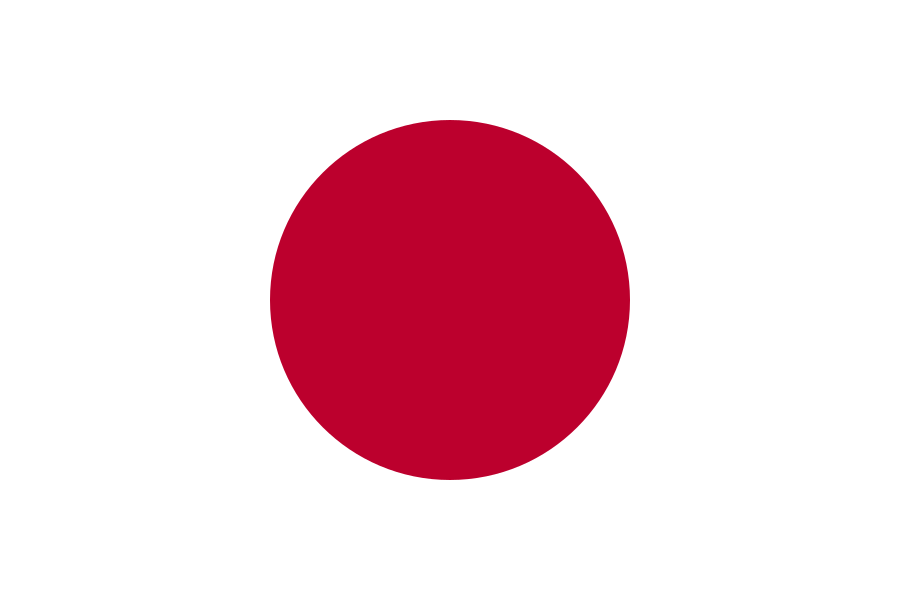
A crimson sun on a white field — known as the Hinomaru. Here is what it means, its exact colors and proportions, and free files you can download and use.
OVERVIEW
QUICK FACTS
DOWNLOADS
Japan Flag (PNG)
Pick a size — the image is generated instantly in your browser.
MEANING HISTORY
The red circle represents the sun. Japan is known as the “Land of the Rising Sun” (Nihon/Nippon literally means “origin of the sun”), and the sun has been a national symbol for well over a millennium, tied to the sun goddess Amaterasu in Japanese mythology.
White stands for purity, honesty, and integrity — values with deep roots in Japanese culture. Together, red and white are considered celebratory colors in Japan and appear at festivals, weddings, and national events.
Sun-disc flags were used by Japanese daimyo and ships for centuries. In 1870 the Meiji government designated the Hinomaru for merchant ships, and it served as the de facto national flag until the Act on National Flag and Anthem made it official on August 13, 1999.
FAQ
The Japanese flag is a plain white rectangle with a crimson-red circle in the center. The circle represents the sun, and the flag has a 2:3 height-to-width ratio with the disc's diameter equal to three-fifths of the flag's height.
Officially it is called Nisshōki (日章旗, “flag of the sun”), but in Japan it is most commonly known as the Hinomaru (日の丸, “circle of the sun”).
No. The flag with sixteen red rays is the Rising Sun Flag (Kyokujitsu-ki), used today by the Japan Maritime Self-Defense Force. The national flag is the plain white flag with a single red disc.
Yes. The national flag design itself is in the public domain, so you can use the SVG and PNG files here for personal, educational, or commercial projects.
The commonly cited value is a deep crimson, approximately #BC002D in hex (Munsell 5R 4/12 per official specifications). It is noticeably darker than pure red.